

Learning how to read NFP is one of the most important skills a trader can develop — especially today, April 3, 2026, as the latest U.S. Non-Farm Payrolls report is set to be released.
Every month, NFP creates sharp volatility across the forex market, but not every trader understands why the market moves or how to interpret the data properly. Some traders focus only on the headline number, while others miss the bigger picture entirely.
In this guide, we’ll break down how to read NFP step by step using real expectations for today’s release, so you can approach the market with structure, clarity, and confidence.
Before learning how to read NFP, you need to understand the basics.
Non-Farm Payrolls (NFP) measures the number of jobs added or lost in the U.S. economy each month and is released by the Bureau of Labor Statistics. It is one of the most powerful market-moving events in forex.
Because employment is directly tied to economic growth, inflation, and monetary policy, NFP often has a direct impact on the U.S. dollar and related markets.
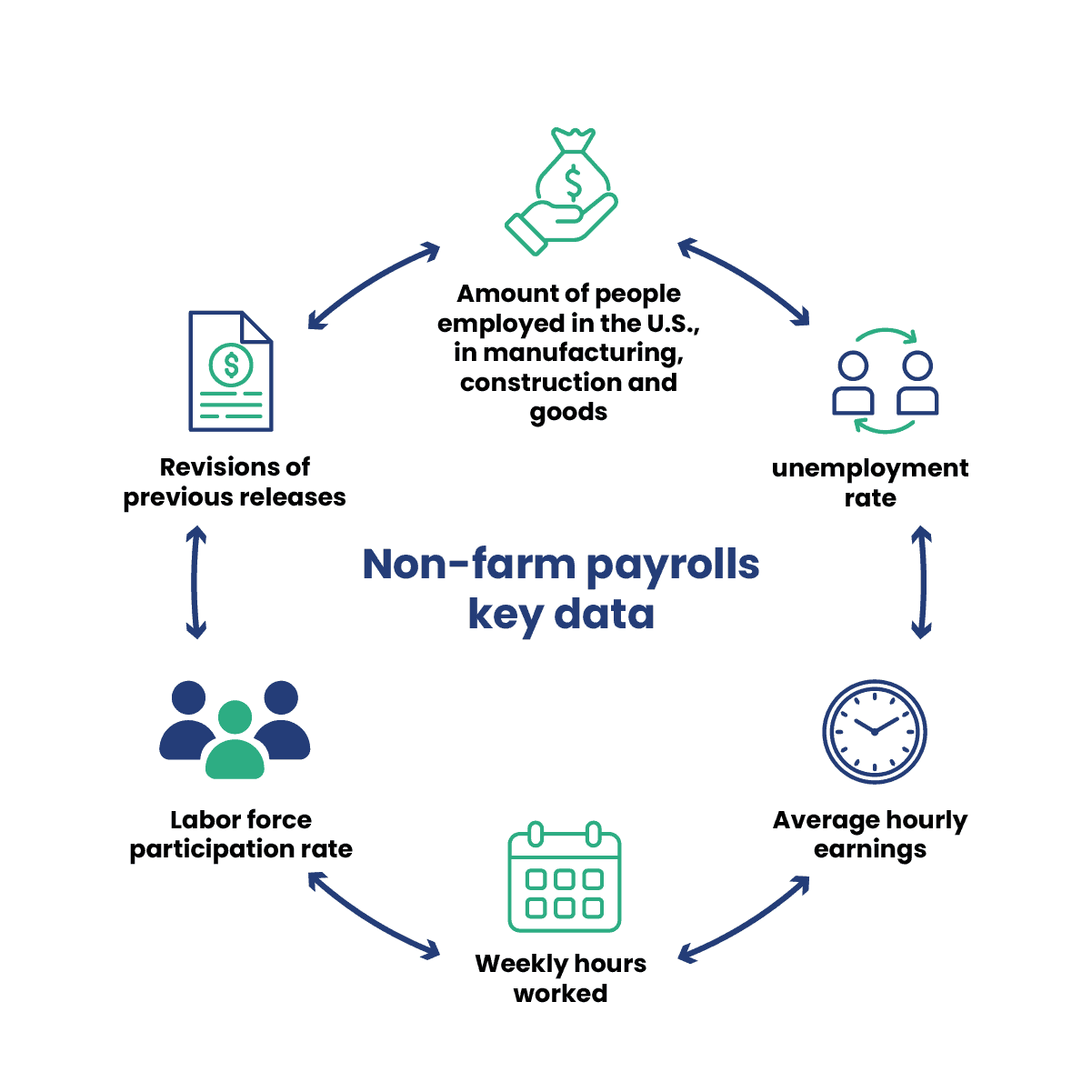
To truly understand how to read NFP, you must start with expectations.
Here’s what the market is pricing in for today:
Key Takeaway: Last month’s NFP came in negative, massively missing expectations — which shocked the market and weakened USD sentiment.
Now, markets expect a rebound, but confidence remains fragile.
| Indicator | Bias | Summary |
|---|---|---|
| Previous Nonfarm Payrolls | Negative | US Nonfarm Payrolls fell by 92,000 in February, reversing January’s +126,000 gain and significantly missing expectations of +59,000, signaling weakness in the labor market. |
| Challenger Job Cuts | Negative | Planned layoffs increased to 60.62K in March, up from 40.3K in February, indicating rising corporate workforce reductions. |
| Initial Jobless Claims | Positive | The 4-week average declined to 207,750 (week ending March 28), showing a slight improvement in short-term labor conditions. |
| Continuing Jobless Claims | Negative | Continuing claims rose to 1.841 million, up by 25,000, suggesting more people are staying unemployed for longer periods. |
| ISM Services PMI | Neutral | The ISM Services PMI report will be released after the NFP data, so it does not influence pre-release sentiment. |
| ISM Manufacturing PMI | Neutral | The PMI edged up to 52.7 from 52.4, but the Employment Index remains in contraction (48.7), reflecting mixed labor signals. |
| University of Michigan Consumer Sentiment | Negative | Consumer sentiment dropped to 53.3 from 56.6, with expectations falling sharply, indicating weakening confidence in economic conditions. |
| Conference Board Consumer Confidence | Neutral | Confidence rose slightly to 91.8, but the Expectations Index declined to 70.9, showing cautious outlook despite stable present conditions. |
| ADP Employment Report | Positive | Private payrolls increased by 62K in March, beating expectations of 40K, suggesting some resilience in hiring. |
| JOLTS Job Openings | Neutral | Job openings declined to 6.88M from 7.24M. March data is pending, leaving the signal incomplete ahead of NFP. |
This is where how to read NFP becomes critical.
Meaning: If today’s number disappoints again, the reaction could be stronger than usual.
NFP is already one of the most volatile events, often causing sharp moves across forex, gold, and indices within seconds.
A core principle of how to read NFP:
Markets move based on deviation from expectations.
Example scenarios for today:
Key takeaway: The bigger the surprise, the bigger the move.
Here’s a structured approach to mastering how to read NFP:
Today: ~60K expected → this is your benchmark.
This determines the immediate market direction.
Even if jobs beat expectations, weak wages can limit USD strength.
Expect spikes, liquidity gaps, and spread widening.
Professional traders often wait 5–15 minutes before entering trades.
Pro insight: The first move is often liquidity — not the real direction.
Even when learning how to read NFP, traders often:
Reminder: NFP punishes impatience more than lack of knowledge.
Learning how to read NFP is not about predicting the number — it’s about understanding the context.
Today’s April 3, 2026 release is especially important because markets are recovering from a weak previous report and are highly sensitive to new data.
Stay disciplined, wait for confirmation, and follow FX Axe for real-time NFP breakdowns.

