

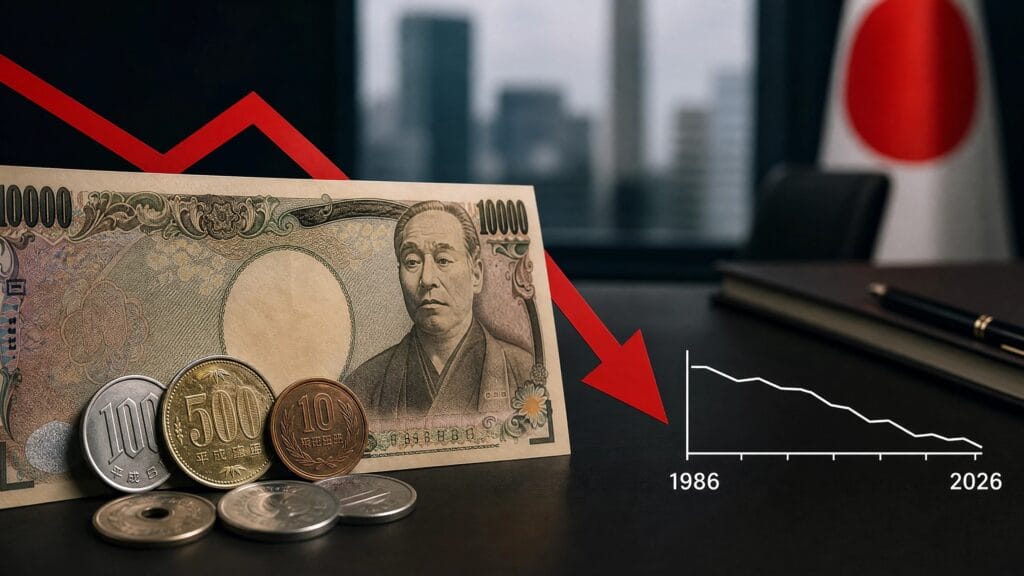
The Japanese Yen is back in the spotlight after falling to its weakest level in 40 years. For forex traders, this is more than another headline.
It is one of the biggest currency stories of 2026 because it raises a critical question:
Can Japan stop the yen from falling, or has the market become too strong to fight?
The Japanese government has already warned that it is prepared to intervene if currency movements become excessive.
However, history shows that intervention is rarely a long-term solution unless the economic conditions behind the move also change.
The biggest reason behind the weakness of the Japanese Yen is the widening gap between Japan's interest rates and those in the United States.
While the U.S. Federal Reserve has maintained relatively high interest rates, the Bank of Japan (BOJ) has kept monetary policy much more accommodative. Higher U.S. yields encourage global investors to move money into dollar-denominated assets, increasing demand for the U.S. dollar while reducing demand for the yen.
Another factor is Japan's dependence on imported energy. As oil prices rise, Japanese companies need to buy more U.S. dollars to pay for imports. That additional demand for dollars puts even more pressure on the Japanese Yen.
The result is a steady rise in USD/JPY, pushing the yen to levels not seen since 1986.
Japanese officials have repeatedly stated they are closely monitoring the foreign exchange market and are prepared to take action against excessive volatility.
Currency intervention usually means Japan sells U.S. dollars from its foreign exchange reserves and buys the Japanese Yen in an attempt to strengthen its currency.
This is not the first time Japan has stepped into the market.
The country carried out several interventions in recent years when the yen weakened sharply. Those actions briefly pushed the yen higher, but the gains faded as traders returned their focus to interest rate differences.
That is why many analysts believe intervention alone may slow the decline but is unlikely to reverse the long-term trend unless monetary policy also changes.
This is where the debate becomes more interesting.
Markets are not questioning whether Japan has enough reserves to intervene. It does.
The real question is whether intervention can overcome the powerful forces driving the market.
As long as U.S. interest rates remain significantly higher than Japan's, investors still have an incentive to hold dollars instead of yen.
Simply put, intervention can influence market sentiment for a few days or even weeks, but changing the direction of the Japanese Yen usually requires a shift in interest rate expectations.
That is why traders are paying just as much attention to the Bank of Japan as they are to government warnings.
The Japanese Yen is one of the world's most traded currencies, making this an important story for every forex trader.
A weaker yen affects much more than USD/JPY.
It can influence:
Many traders are now watching whether Japanese officials move from verbal warnings to actual intervention.
If that happens, USD/JPY could experience sharp volatility within minutes.
Several events could determine the next move for the Japanese Yen.
The first is any unexpected announcement from the Bank of Japan regarding interest rates or monetary policy.
The second is the path of the U.S. dollar. If expectations for Federal Reserve policy change, USD/JPY could react quickly.
Finally, traders are watching for direct intervention from Japanese authorities. While intervention may provide temporary support, markets will ultimately decide whether the move can be sustained.
For now, the Japanese Yen remains under pressure, and every new statement from Tokyo has the potential to move the forex market.
The Japanese Yen reaching a 40-year low is not simply a story about one currency. It reflects the growing gap between two major economies with very different monetary policies.
Japan is trying to stabilise its currency, while global investors continue to favour higher-yielding assets elsewhere.
Whether intervention succeeds or not, one thing is certain: the Japanese Yen will remain one of the most closely watched currencies in the forex market over the coming weeks.
For traders, understanding why the yen is moving is far more valuable than reacting to headlines. The biggest opportunities often come from understanding the forces behind the price action—not just the price itself.
To stay updated with the latest forex news, market analysis, and educational trading content, follow the FX Axe YouTube Channel.
Read more:
What Is Market Sentiment? 7 Key Factors Every Trader Should Understand

