

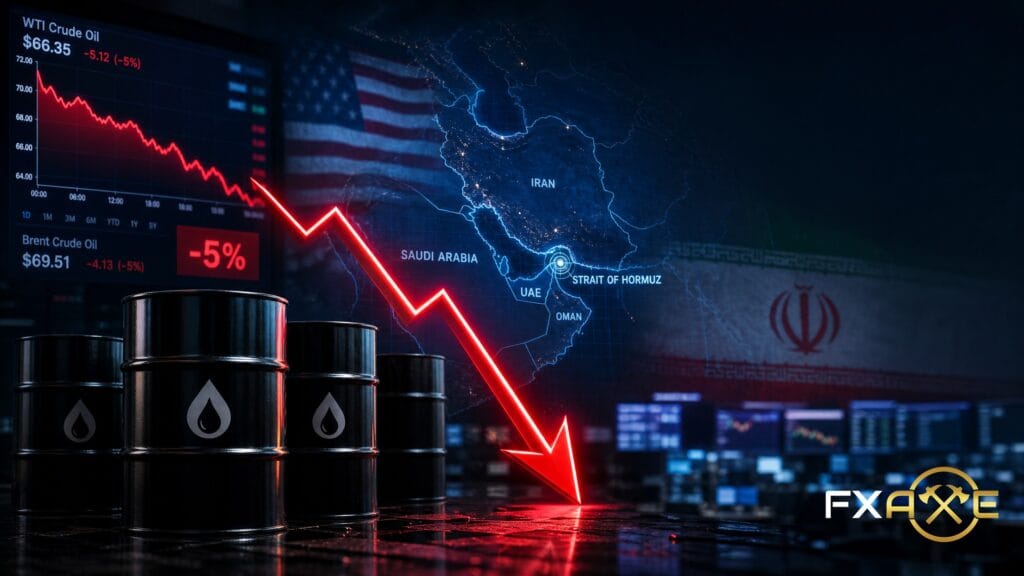
Oil prices fell more than 5% after markets reacted to improving expectations that U.S.-Iran tensions could ease, reducing concerns about possible energy supply disruptions and encouraging investors to return to risk-sensitive assets.
According to Reuters, West Texas Intermediate (WTI) crude dropped by $5.07 to around $79.60 per barrel, while Brent crude declined by approximately $4.23 to around $83.70 per barrel. The sharp move came as traders lowered expectations of a prolonged geopolitical crisis affecting global oil supplies.
The decline highlights how quickly crude oil markets can react to changing headlines. Oil prices are influenced not only by current supply and demand conditions but also by expectations about future risks.
For forex traders, movements in crude oil can impact inflation expectations, interest-rate forecasts, and currencies linked to commodity markets.
Oil prices fell more than 5% because investors reduced the geopolitical risk premium that had supported crude prices during periods of uncertainty.
When tensions rise between major global powers, traders often expect possible disruptions to production, exports, or shipping routes. These concerns can push oil prices higher as markets prepare for tighter supply conditions.
Iran remains a major focus for energy markets because of its role in global oil production and its location near the Strait of Hormuz, one of the world’s most important oil transportation routes.
However, signs that tensions may cool encouraged traders to remove some of the risk premium previously built into oil prices. Investors who had bought crude as protection against geopolitical uncertainty began reducing their positions, increasing selling pressure.
This reaction shows why oil markets can experience large price swings even without immediate changes in physical supply.
Oil prices fell more than 5% as investors became more confident that the risk of a major supply disruption could decrease.
The Strait of Hormuz remains one of the biggest concerns for energy traders because a significant amount of global oil shipments pass through the region.
Any disruption in this area could create supply concerns and potentially send crude prices higher. However, improving diplomatic expectations reduced fears of an immediate crisis.
The U.S. Energy Information Administration (EIA) highlights the importance of major oil transit routes in maintaining global energy stability.
For traders, the key lesson is that markets often move based on expectations before actual events occur. If investors believe risks are decreasing, prices can fall quickly even after a previous rally.
Oil prices fell more than 5%, creating potential changes in inflation expectations across global markets.
Energy prices are closely connected to inflation because oil affects transportation costs, manufacturing expenses, and consumer prices.
When crude oil rises sharply, businesses often face higher costs, which can eventually impact households. A decline in oil prices may provide some relief by reducing energy-related inflation pressure.
For forex traders, this relationship is important because inflation influences central bank decisions.
If lower energy prices help slow inflation, markets may adjust expectations about future interest-rate decisions from major central banks, including the Federal Reserve.
Interest-rate expectations are one of the biggest drivers of currency movements, which is why traders often monitor commodity markets alongside economic data.
Oil prices fell more than 5%, but the impact extends beyond the energy sector.
Oil-exporting economies can experience pressure on their currencies when crude prices decline because lower energy prices may reduce export income.
Meanwhile, oil-importing countries may benefit from cheaper energy costs because lower fuel prices can support consumers and businesses.
The U.S. dollar is another market traders should watch. During periods of geopolitical uncertainty, investors often increase demand for the dollar as a safe-haven currency.
As tensions ease, some of that demand can weaken. However, U.S. economic data, Federal Reserve policy expectations, and bond market movements remain key drivers of dollar performance.
This is why forex traders should avoid analyzing currency markets in isolation. Commodities, interest rates, and global risk sentiment are closely connected.
Oil prices fell more than 5%, but traders should not assume that the decline will automatically continue.
The oil market remains sensitive to several factors, including:
If diplomatic progress continues and supply concerns remain limited, crude oil could face additional pressure.
However, any renewed geopolitical uncertainty could quickly bring back demand for oil as a protection against supply risks.
Markets often move ahead of confirmed developments, meaning traders need to monitor both headlines and broader economic conditions.
Oil prices fell more than 5%, showing how quickly sentiment can change when geopolitical risks shift.
For beginner traders, understanding these relationships can improve market analysis. A major move in oil can influence inflation expectations, stock markets, and currency pairs.
Successful traders do not focus only on one price chart. They consider the bigger picture, including economic data, central bank decisions, and global events.
Risk management remains essential because markets can reverse quickly when new information appears.
Oil prices fell more than 5% after easing U.S.-Iran tensions reduced concerns about possible supply disruptions and lowered demand for safe-haven assets.
The move pushed WTI crude toward $79.60 per barrel and Brent crude toward approximately $83.70 per barrel, highlighting how strongly geopolitical developments can influence energy markets.
While the immediate reaction was negative for oil, traders should continue monitoring diplomatic developments, inflation expectations, and global economic conditions.
For forex traders, this event is another reminder that commodities, currencies, and central bank policies are deeply connected.
Stay updated with forex news, broker reviews, trading education, and market analysis on FX Axe.
Follow us on FX Axe YouTube Channel to get real-time insights, broker reviews and trading education videos.

