

Rising fuel prices are once again capturing global attention as geopolitical tensions push oil markets toward potential instability. As the war-driven spike in oil prices intensifies, investors, policymakers, and consumers are increasingly worried about the possibility of another global energy shock similar to what occurred in 2022.
Despite these concerns, former U.S. President Donald Trump has downplayed the issue of rising fuel prices, saying he is not particularly worried about gasoline costs increasing. His remark — “If they rise, they rise” — sparked debate among analysts and economists who warn that sustained fuel price increases could have broad economic consequences.
At the same time, the United States has quietly taken steps behind the scenes to stabilize global supply by allowing additional Russian oil to flow into international markets through India.
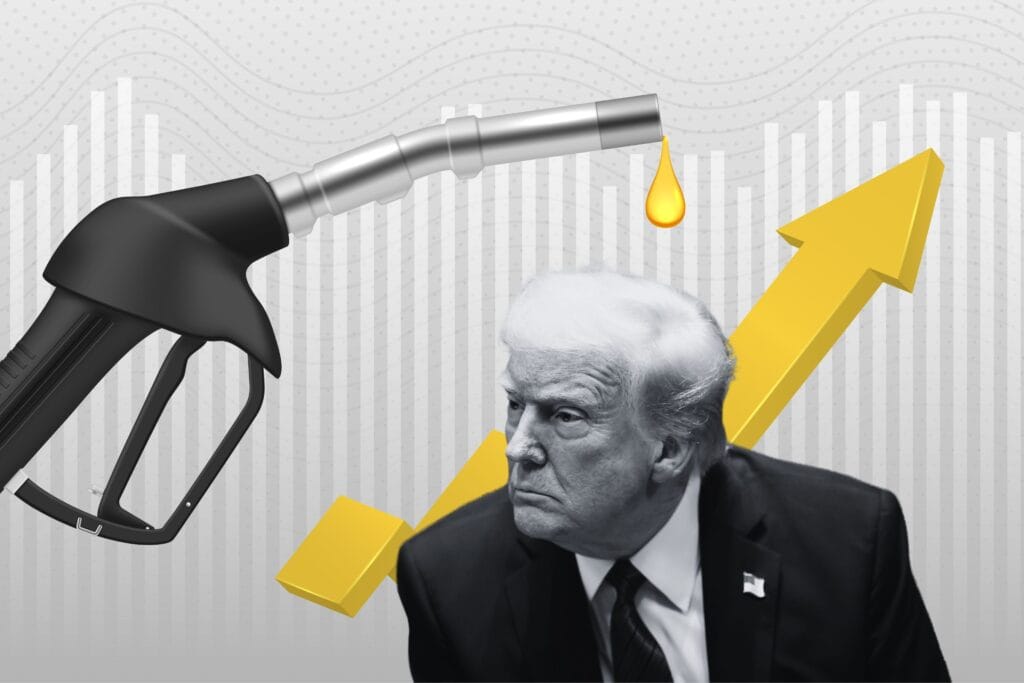
The recent surge in rising fuel prices is primarily driven by geopolitical tensions, supply disruptions, and uncertainty in the global oil market. Crude oil prices have climbed sharply in recent weeks as traders react to concerns about shipping routes, production limits, and potential sanctions affecting supply chains.
Energy markets are extremely sensitive to geopolitical events, and even minor disruptions can lead to major price volatility. Many analysts believe that if the trend continues, the world could see a scenario similar to the 2022 energy crisis, when gasoline and diesel prices surged across North America, Europe, and parts of Asia.
Higher oil prices often ripple through the global economy. Transportation costs increase, production expenses rise, and businesses frequently pass those costs on to consumers.
More insight into global energy market dynamics.
Amid growing concern about rising fuel prices, Trump appeared unfazed by the potential impact on consumers.
Speaking to reporters, he commented: “If they rise, they rise.”
The remark suggests that he views gasoline price fluctuations as a natural part of global market cycles rather than a crisis requiring immediate intervention.
Supporters argue that such a stance reflects confidence in the market’s ability to correct itself over time. However, critics say ignoring rising fuel prices could underestimate the strain higher energy costs place on households and businesses.
Historically, gasoline prices have been politically sensitive in the United States. Public frustration over high fuel costs has often influenced economic policy and election debates.
While public comments suggested minimal concern about rising fuel prices, U.S. policymakers appear to be quietly taking steps to prevent a severe supply shortage.
Reports indicate that the United States issued a 30-day waiver allowing India to purchase additional Russian oil, helping maintain global oil supply levels during the current geopolitical crisis.
India has emerged as a major buyer of discounted Russian crude since Western sanctions were introduced. By allowing more of this oil to reach the market indirectly, policymakers hope to ease pressure on rising fuel prices and prevent dramatic price spikes.
This move highlights how governments sometimes balance political messaging with practical energy policy decisions aimed at stabilizing markets.
Additional information about global oil supply trends is available through https://www.energy.gov/eere/articles/how-global-oil-markets-work
Several key factors are contributing to the latest wave of rising fuel prices:
War and political instability in major energy regions often disrupt production and transportation routes.
Sanctions targeting oil-producing nations can limit supply available to global markets.
As major economies continue recovering and expanding, energy consumption rises.
Government decisions — such as allowing Russian oil purchases through third parties — can significantly influence market balance.
When these forces combine, even relatively small disruptions can send oil prices climbing rapidly.
The consequences of rising fuel prices extend far beyond the gas pump. Higher energy costs affect nearly every sector of the economy.
Transportation companies face higher operating costs, which increases shipping prices. Manufacturers must pay more for fuel and electricity, raising production expenses. Airlines also face higher fuel bills, which often result in more expensive ticket prices.
For households, rising fuel prices can quickly reduce purchasing power. Families spend more on gasoline and energy, leaving less money available for other goods and services.
According to research from the https://www.imf.org/en/Topics/climate-change/energy-transition
energy price shocks can significantly influence global inflation trends.
The future of rising fuel prices will largely depend on geopolitical developments, production decisions by major oil producers, and global economic demand.
If supply disruptions intensify or conflict spreads to additional energy-producing regions, oil prices could climb further. However, if global supply stabilizes and diplomatic solutions reduce geopolitical tensions, markets could gradually calm.
Energy experts emphasize that governments, oil producers, and financial markets are closely monitoring developments to avoid a repeat of the extreme volatility seen in previous energy crises.
For now, the combination of political statements, strategic policy moves, and shifting supply dynamics ensures that rising fuel prices will remain one of the most closely watched issues in the global economy.
Stay tune for more updates at FX Axe.

