


Every successful forex trader understands that making profits is only one part of trading. The other part is protecting your capital when the market moves against you.
This is why learning Stop Loss vs Take Profit is essential for anyone looking to build a strong forex trading strategy.
These two tools help traders manage risk, control emotions, and create a clear exit plan before entering a trade.
Before building a complete trading strategy, beginners should first understand the basics of Forex Trading for Beginners and how the market works.
A stop loss limits potential losses, while a take profit helps secure gains. Together, they form an important part of effective forex risk management.
A stop loss is an automatic order that closes a trade when the price reaches a specific level. Traders use it to limit potential losses and protect their trading accounts.
For example, if a trader buys EUR/USD at 1.1000 and sets a stop loss at 1.0950, the trade will automatically close if the price falls to that level. Instead of allowing losses to continue growing, the trader has already decided the maximum amount they are willing to risk.
Using a stop loss is especially important during periods of high market volatility, when prices can move quickly due to economic news, interest rate decisions, or unexpected events.
A take profit order automatically closes a trade once the market reaches a trader’s target price. Unlike a stop loss, which protects against losses, a take profit helps traders secure profits.
For example, if a trader enters a GBP/USD trade at 1.2500 and expects the price to rise, they may set a take profit level at 1.2600. Once the market reaches that target, the trade closes and the profit is locked in.
A take profit order helps remove emotions from trading. Many traders make the mistake of holding winning trades for too long, hoping for bigger gains, only to see the market reverse.
When looking at Stop Loss vs Take Profit, the biggest difference is their purpose.
A stop loss is designed to manage risk. It limits how much money a trader can lose on a single position.
A take profit is designed to manage rewards. It allows traders to exit a successful trade automatically once their target is reached.
| Stop Loss | Take Profit |
|---|---|
| Limits potential losses | Secures potential profits |
| Protects trading capital | Locks in gains |
| Used when markets move against you | Used when markets move in your favor |
| Part of risk management | Part of profit planning |
Both tools are important because a complete trading plan needs protection and profit targets.
Many beginner traders focus only on finding winning strategies. However, even the best trading strategy can fail without proper risk management.
Understanding Stop Loss vs Take Profit helps traders:
Professional traders often focus on managing risk first because protecting capital allows them to continue trading during difficult market conditions.
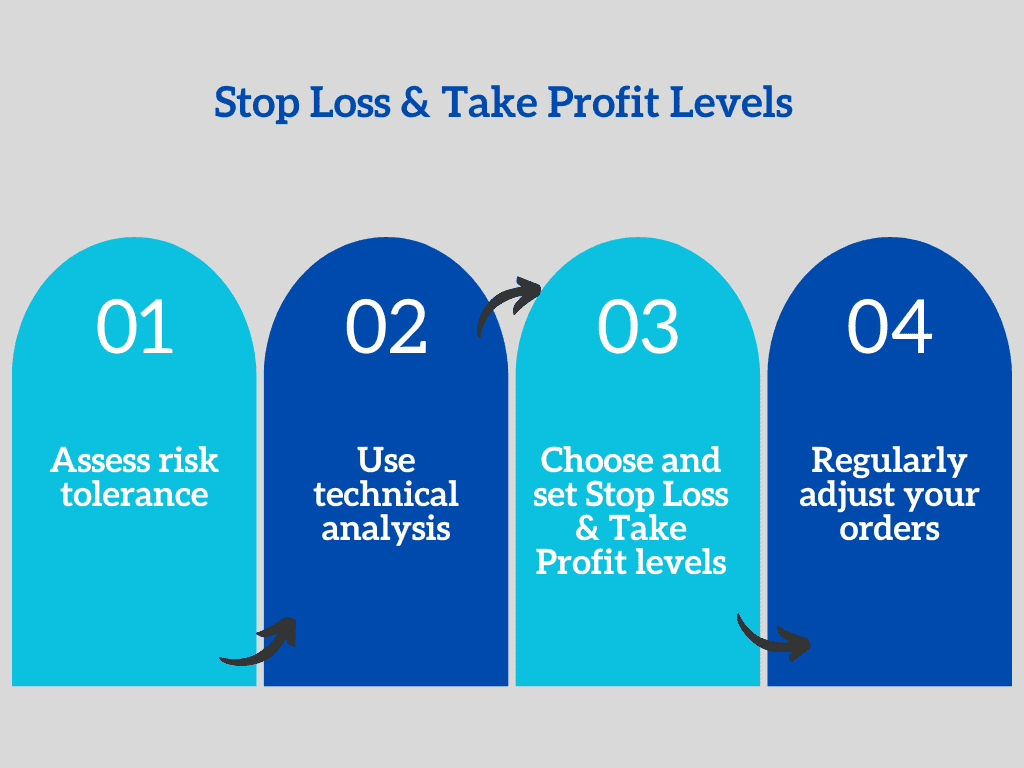
There is no universal rule for where traders should place their stop loss or take profit levels. The best approach depends on market conditions, trading style, and technical analysis.
Common methods include:
Many traders use a 1:2 risk-reward ratio, meaning they risk one potential loss to target two potential profits.
While this does not guarantee success, it helps create a more structured trading plan.
Many traders use platforms such as MetaTrader 5 to place stop loss and take profit orders while managing their trades.
Even experienced traders can make mistakes when using stop loss and take profit orders.
Some common mistakes include:
A good forex trader does not only focus on entering trades. They also plan how and when they will exit.
When comparing Stop Loss vs Take Profit, traders should not think of them as competing tools. They work together to create a balanced trading strategy.
A stop loss protects your account when your analysis is wrong. A take profit helps you capture gains when your analysis is correct.
Using both orders allows traders to approach the market with a clear plan instead of making emotional decisions during price movements.
Understanding Stop Loss vs Take Profit is a key part of becoming a more disciplined forex trader. These tools help manage risk, protect capital, and create a structured approach to trading.
While no trading method can guarantee profits, effective risk management can improve your ability to handle losses and take advantage of market opportunities.
Before opening any forex trade, always decide your risk level and profit target.
Learning how to properly use Stop Loss vs Take Profit can help traders build better habits and develop a stronger long-term trading strategy.

