EURUSD Bid: --
USDJPY Bid: --
GBPUSD Bid: --
USDCHF Bid: --
AUDUSD Bid: --
USDCAD Bid: --
NZDUSD Bid: --
EURGBP Bid: --
GBPJPY Bid: --
WTI Bid: --
BRENT Bid: --
XAUUSD Bid: --
XAGUSD Bid: --
SPX500 Bid: --
DAX40 Bid: --
US30 Bid: --
JPN225 Bid: --
NAS100 Bid: --
UK100 Bid: --
BTCUSD Bid: --
ETHUSD Bid: --
LTCUSD Bid: --
XRPUSD Bid: --
EURUSD Bid: --
USDJPY Bid: --
GBPUSD Bid: --
USDCHF Bid: --
AUDUSD Bid: --
USDCAD Bid: --
NZDUSD Bid: --
EURGBP Bid: --
GBPJPY Bid: --
WTI Bid: --
BRENT Bid: --
XAUUSD Bid: --
XAGUSD Bid: --
SPX500 Bid: --
DAX40 Bid: --
US30 Bid: --
JPN225 Bid: --
NAS100 Bid: --
UK100 Bid: --
BTCUSD Bid: --
ETHUSD Bid: --
LTCUSD Bid: --
XRPUSD Bid: --

Strait of Hormuz Blockade Impact: 5 Powerful Risks Driving Oil, USD, and Market Volatility

Posted: 14th Apr 2026

Strait of Hormuz blockade impact on global oil shipping and market volatility

Strait of Hormuz Blockade Impact Lifts Oil and Safe-Haven Demand

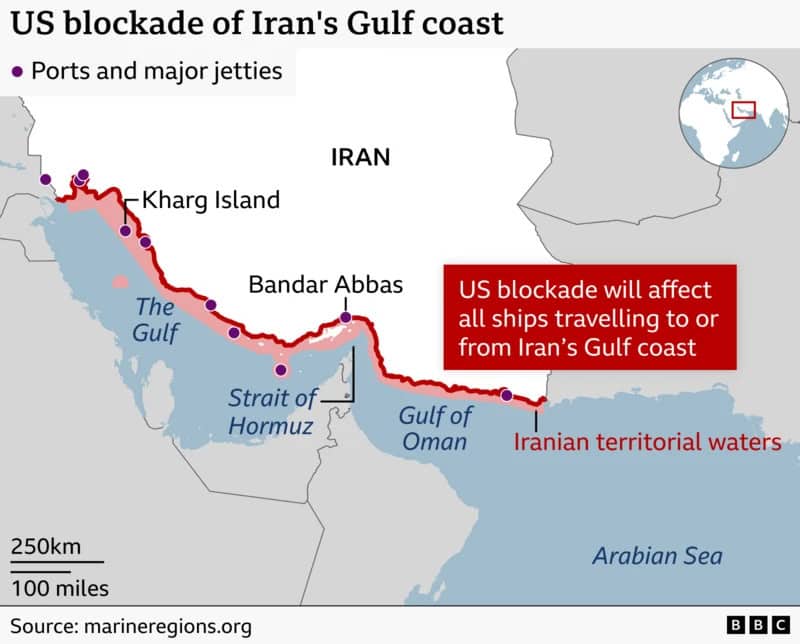
The Strait of Hormuz blockade impact is rapidly becoming a dominant market driver after China warned that a potential U.S. move to block the key shipping route would be “dangerous and irresponsible.”

For traders, the Strait of Hormuz blockade impact is not just geopolitical rhetoric—it represents a real and immediate threat to global energy flows, inflation trends, and risk sentiment.

Roughly 20% of global oil supply passes through this narrow waterway, meaning any disruption can trigger sharp reactions across oil, forex, and equities.

Market Importance of the Strait of Hormuz

The Strait of Hormuz blockade impact is rooted in supply vulnerability.

A disruption scenario could immediately result in:

  • Reduced global oil supply
  • Sharp increase in shipping and insurance costs
  • Rising geopolitical risk premium
  • Disruption in energy-dependent economies

China’s warning reflects the global concern, particularly from major importers heavily dependent on Middle East crude flows. Any escalation increases uncertainty not just for energy markets but also for global growth expectations.

For broader supply insights, refer to the International Energy Agency.

Oil Market Reaction to Strait of Hormuz Blockade Impact

Oil is the first and most sensitive asset to geopolitical risk.

The Strait of Hormuz blockade impact is already reflected in price behavior:
  • Rising crude oil volatility
  • Stronger risk premium in Brent and WTI
  • Wider intraday trading ranges
  • Increased sensitivity to headlines
Strait of Hormuz blockade impact on oil prices

Historically, Middle East disruptions have produced sharp upward oil spikes followed by extended volatility phases, creating both breakout and reversal opportunities for active traders. Energy markets tend to reprice risk quickly, especially when supply uncertainty rises.

Forex Market Impact: USD Strength and Commodity FX Support

In FX markets, the impact is creating a classic risk-off environment.

Currencies Benefiting

  • USD (safe-haven demand increases)
  • CAD (oil-linked economy)
  • NOK (energy exporter exposure)

Currencies Under Pressure

  • EUR (growth sensitivity)
  • Emerging market currencies
  • Risk-sensitive high-beta FX

The U.S. Dollar continues to attract inflows as investors hedge geopolitical uncertainty. However, if oil-driven inflation accelerates, USD strength could become more volatile and less directional.

Inflation and Central Bank Reaction

One of the most important transmission channels of the Strait of Hormuz blockade impact is inflation.

Higher crude oil prices feed directly into:

  • Transportation costs
  • Energy bills
  • Manufacturing input prices
  • Consumer goods inflation

This creates complications for central banks, particularly the Federal Reserve, which has been attempting to manage inflation while supporting economic stability.

If energy prices remain elevated, markets may begin pricing in:

  • Delayed rate cuts
  • Higher-for-longer interest rates
  • Increased bond market volatility

For official inflation tracking, refer to the U.S. Bureau of Labor Statistics.

Traders hedge against uncertainty, although rising inflation expectations could create mixed flows.

Risk Sentiment Shifts

Markets are beginning to reflect a more defensive tone:

  • Equities facing pressure
  • Gold attracting safe-haven flows
  • Crypto turning more volatile

This suggests investors are preparing for uncertainty rather than stability.

Trading Strategy in a Headline-Driven Market

This environment favors agility over long-term positioning.

Key Approaches:

  • Trade short-term momentum
  • Focus on breakout setups
  • Use tight risk controls
  • Monitor news flow closely

Geopolitical markets can reverse quickly, making discipline essential.

What to Watch Next

Key developments include:

  • U.S. policy direction
  • Iran’s response
  • China’s next moves
  • Actual supply disruptions

Any escalation could trigger sharp cross-asset moves, especially in oil and FX.

Conclusion

The Strait of Hormuz blockade impact is evolving into a major macro catalyst.

From oil price spikes to renewed inflation risks and shifting FX flows, this event has the potential to reshape market dynamics in the near term.

For traders, the key takeaway is clear: volatility is back, and opportunity comes with risk.

If you are serious about trading geopolitical markets, don’t wait for stability — volatility is where opportunity exists.

Let’s connect, structure your trading setup, and position you ahead of major market moves.

📩 Connect with us: [email protected]

Breaking news creates trading opportunities — are you ready?

Trade oil, forex, and global markets with platforms built for speed and volatility.

Follow us on
Website Managed by BuiltByGo
Disclaimer: The information provided on FX Axe is for educational and informational purposes only and should not be construed as financial advice. Trading Foreign Exchange (FX), Contracts for Difference (CFDs), and other leveraged financial products involves a high level of risk and may not be suitable for all investors. Leverage can work both to your advantage and disadvantage, and as a result, you may lose more than your initial investment. Before deciding to trade FX, CFDs, or any other financial instrument, you should carefully consider your investment objectives, level of experience, and risk tolerance. You should not invest money that you cannot afford to lose. It is strongly advised that you seek independent financial advice if you have any doubts. FX Axe does not provide investment, tax, legal, or financial advice of any kind. We may receive compensation from brokers and partners featured on this website, but such relationships do not influence our reviews or recommendations. All reviews are based on our own opinions and research and should not be interpreted as endorsements or guarantees of any service. Past performance is not indicative of future results. The trading of FX and CFDs carries a significant risk of loss. By using this website, you acknowledge that FX Axe bears no responsibility for any losses you may incur from your trading activities or reliance on information provided here.

Affiliate Disclosure: Some of the links and references on FX Axe may relate to third-party brokers or service providers. In certain cases, we may receive compensation if you choose to engage with these providers through our website. This helps support the ongoing operation of the site and allows us to continue publishing content at no direct cost to our readers. Our content is created with the aim of being informative and useful. While commercial relationships may exist, we strive to ensure that the information presented remains objective and based on our own research and perspective.
cross