

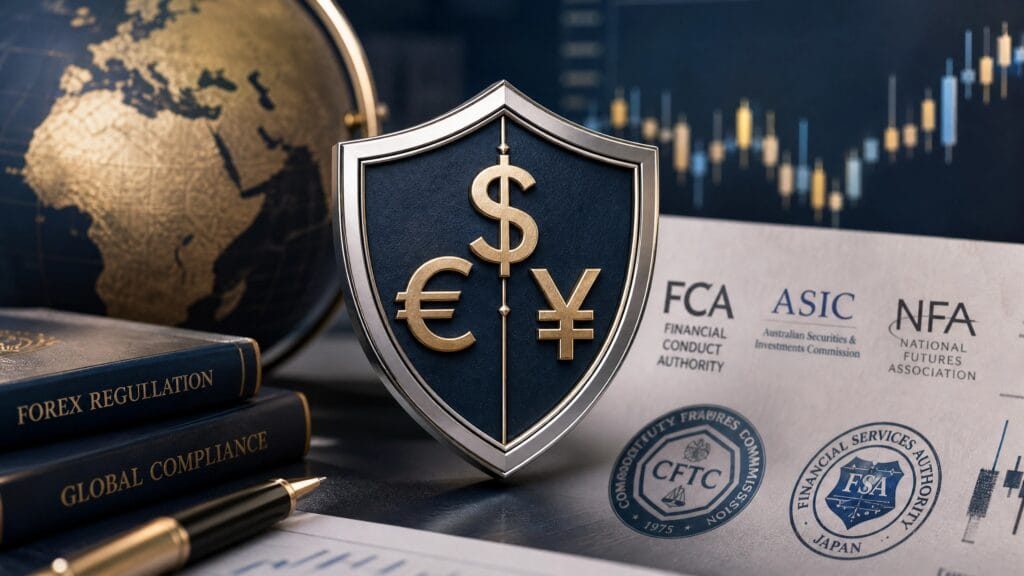
The forex market is the largest financial market in the world, with trillions of dollars traded every day. Because the market operates globally, forex brokers are supervised by different financial authorities depending on where they operate.
These authorities create forex regulations to ensure brokers follow specific rules, maintain financial standards, and provide a safer trading environment for clients.
However, not all forex licenses are the same. Some regulators have stricter requirements, stronger supervision, and greater protection for traders than others.
Understanding the different types of forex regulations helps traders know what a broker’s license actually means and why it matters.
Forex regulations are rules established by financial authorities to control how forex brokers operate.
A broker must usually apply for a license from a regulatory body before offering trading services in a specific region.
These rules may cover:
The main purpose is to create a more transparent and responsible trading environment.
Before choosing a broker, traders should understand who regulates the company, where the license comes from, and what level of protection that regulation provides.
Regulation is only one part of evaluating a forex broker. Traders should also consider trading conditions, available platforms, fees, and overall reputation. FX Axe provides detailed forex broker reviews that analyze broker regulation, trading features, platforms, and other important factors traders should consider before opening an account.
One of the biggest reasons regulation matters is the protection of customer money.
Many regulated brokers are required to keep client funds separate from company funds. This means traders’ deposits should not be used for the broker’s daily business operations.
This separation provides an additional layer of protection if a broker experiences financial difficulties.
The forex industry attracts millions of traders, but unfortunately, it has also attracted fraudulent companies.
Strong forex regulations help prevent issues such as:
Regulators monitor brokers and can take action if companies fail to follow the required rules.
Regulated brokers must provide clearer information about:
This allows traders to understand the conditions before opening an account.
The Financial Conduct Authority (FCA) is one of the most respected financial regulators in the world.
The FCA supervises financial companies operating in the United Kingdom and focuses on protecting consumers and maintaining market integrity.
FCA-regulated brokers must follow strict requirements, including:
Many traders consider FCA regulation one of the strongest signs of broker reliability.
The Australian Securities and Investments Commission (ASIC) regulates financial markets and financial service providers in Australia.
ASIC aims to maintain fair and efficient financial markets.
Forex brokers regulated by ASIC must meet requirements related to:
ASIC is widely recognized because Australia has one of the world's developed financial systems.
The Cyprus Securities and Exchange Commission (CySEC) is one of the most common regulators among forex brokers serving European traders.
CySEC oversees investment firms and ensures they follow European financial regulations.
CySEC-regulated brokers typically must meet requirements involving:
The United States has one of the strictest forex regulatory environments.
The Commodity Futures Trading Commission (CFTC) and National Futures Association (NFA) supervise forex activities in the US.
US forex brokers face strict requirements, including:
Because of these strict rules, fewer brokers operate in the US compared with other regions.
The Financial Sector Conduct Authority (FSCA) regulates financial service providers in South Africa.
FSCA focuses on ensuring companies operate fairly and follow financial laws.
Many international brokers use FSCA licenses to serve traders in South Africa and other regions.
Some brokers operate under offshore regulators, including:
Offshore regulation does not automatically mean a broker is unsafe. However, traders should understand that these regulators may have different requirements compared with larger regulators like FCA, ASIC, or CFTC.
The level of protection depends on:
No.
A forex license only shows that a broker is supervised by a specific authority. The level of protection depends on the regulator’s rules.
Generally:
Each has different requirements and levels of oversight.
Understanding forex regulations is an important part of becoming a more informed trader.
A regulated broker does not guarantee profits or eliminate trading risks, but it provides greater transparency and accountability compared with companies operating without proper supervision.
Before choosing a forex broker, traders should look beyond spreads and bonuses. Understanding who regulates a broker and what protections that license provides can make a significant difference.
For traders who prefer visual explanations, FX Axe also shares forex education videos, broker insights, and market breakdowns on its YouTube channel.
Forex regulations are rules created by financial authorities to supervise forex brokers and ensure they operate according to specific financial standards. These rules are designed to improve transparency, protect traders, and reduce the risk of fraudulent activities.
Forex regulations are important because they help create a safer trading environment. They require brokers to follow certain rules, such as protecting client funds, maintaining financial standards, and providing clear information about trading risks.
While regulation does not guarantee profits, it gives traders more confidence that a broker operates under official supervision.
Some of the most recognized forex regulators include:
These regulators are known for having established rules and monitoring systems for financial companies.
A regulated forex broker generally provides more transparency and accountability compared with an unregulated broker.
However, regulation does not mean trading is risk-free. Traders can still lose money due to market volatility, leverage, and poor risk management.
A license means the broker must follow certain rules, but traders should also review factors such as fees, reputation, trading conditions, and customer support.
The main difference is the region and regulatory framework they operate under.
Each regulator has different requirements, but all aim to improve transparency and protect financial consumers.
Yes, some offshore brokers are regulated by authorities such as Seychelles FSA, Mauritius FSC, or Belize FSC.
However, offshore regulations may have different requirements compared with regulators such as FCA, ASIC, or CFTC.
Before choosing an offshore broker, traders should check:
Traders can check a broker’s regulation by:
This helps ensure the license information is legitimate.
No. Forex regulations do not guarantee profits or prevent losses.
Trading currencies involves risks, especially when using leverage. Regulation mainly focuses on making sure brokers operate fairly, provide transparency, and follow financial rules.
Successful trading still depends on education, strategy, and proper risk management.

