

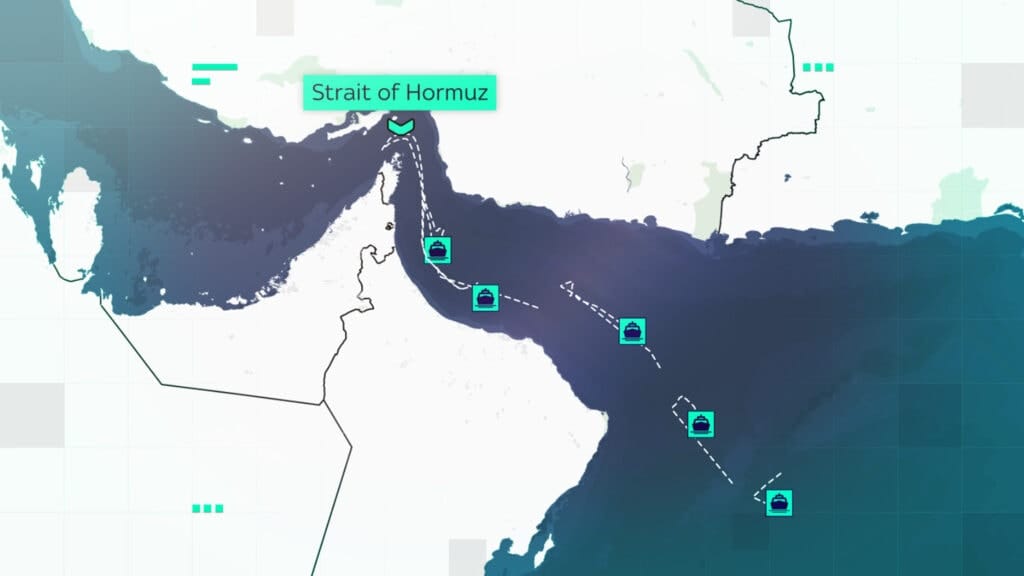
U.S. Destroys 16 Iranian Mine Boats in a dramatic military operation in the Strait of Hormuz, preventing what officials say could have been a serious threat to global oil shipments. The vessels were reportedly preparing to deploy naval mines along tanker routes in one of the world’s most critical energy corridors.
The Strait of Hormuz, located between Iran and Oman, is widely considered the most important oil transit route on the plane
Roughly 17–20 million barrels of oil pass through the strait every day, accounting for about 20% of global oil trade. Because such a large share of the world’s oil supply flows through this narrow corridor, any disruption can quickly affect international energy markets.
When reports surfaced that the U.S. Destroys 16 Iranian Mine Boats in the Strait of Hormuz, governments, shipping companies, and energy traders around the world immediately began assessing the potential risks to oil supply routes.
The Strait of Hormuz is often described as the world’s most critical oil chokepoint. A chokepoint refers to a narrow passage where large volumes of global trade must pass.
Several major oil-exporting countries rely heavily on this corridor, including:
These countries ship a significant portion of their crude oil through the Persian Gulf before tankers pass through the Strait of Hormuz and into international waters.
Because the corridor is narrow, ships have limited maneuvering space. This makes tankers particularly vulnerable to threats such as naval mines, drones, missile attacks, or fast attack boats.
Events like the moment when the U.S. Destroys 16 Iranian Mine Boats highlight how fragile global oil transportation routes can be.
According to the U.S. Energy Information Administration, about one-fifth of global petroleum liquids pass through the Strait of Hormuz each day.
Read more: https://www.eia.gov/international/analysis/special-topics/Strait_of_Hormuz.php
According to U.S. defense officials, surveillance systems detected Iranian vessels suspected of preparing to deploy sea mines along tanker routes inside the Strait of Hormuz.
Sea mines are among the most dangerous threats to maritime trade. Even a few mines can disable large oil tankers and force shipping companies to halt traffic through critical routes.
Once intelligence confirmed the potential threat, U.S. naval forces responded quickly. In the operation, U.S. Destroys 16 Iranian Mine Boats before the mines could be placed into the shipping lanes.
Officials described the mission as a preventive security action aimed at protecting commercial shipping and ensuring freedom of navigation in the region.
The swift response likely prevented a major disruption to oil shipments passing through the Strait of Hormuz.
The news that the U.S. Destroys 16 Iranian Mine Boats quickly spread across the global energy sector. Oil traders and shipping companies began monitoring the situation closely, as tensions in the region often influence oil prices.
Several tanker operators are reportedly reviewing their routes and security procedures when traveling through the Persian Gulf.
At the same time, war-risk insurance premiums for ships traveling through the region have surged. Insurance companies typically raise premiums when geopolitical tensions increase in strategic maritime corridors.
Higher insurance costs can eventually translate into increased shipping expenses, which may push global oil prices higher if the situation escalates.
One reason the event where the U.S. Destroys 16 Iranian Mine Boats matters globally is the lack of alternative oil transportation routes.
Some Gulf countries have built pipelines that bypass the Strait of Hormuz. For example:
However, these pipelines cannot fully replace the massive volume of oil that normally passes through the Strait of Hormuz.
As a result, the security of this narrow corridor remains essential for global energy stability.
Because the Strait of Hormuz is so strategically important, the United States maintains a significant military presence in the region.
The U.S. Fifth Fleet, headquartered in Bahrain, regularly patrols Gulf waters and works with allied navies to safeguard commercial shipping routes.
Its mission includes:
Operations like the moment when the U.S. Destroys 16 Iranian Mine Boats demonstrate how naval forces help maintain stability in global energy corridors.
If the Strait of Hormuz were ever blocked or severely disrupted, the consequences could be significant.
Potential impacts include:
Because nearly 20% of the world’s oil supply flows through this corridor, maintaining security in the region is a priority for many global powers.
The incident where the U.S. Destroys 16 Iranian Mine Boats underscores how quickly tensions in the Persian Gulf can threaten global energy supplies.
The operation in which the U.S. Destroys 16 Iranian Mine Boats in the Strait of Hormuz highlights the fragile balance of security in one of the world’s most vital shipping corridors.
With millions of barrels of oil moving through the strait each day, even small threats can have global consequences. While the swift military response prevented a potential disruption, the event serves as a reminder that the Strait of Hormuz remains one of the most strategically sensitive waterways on the planet.

