

What makes gold prices move is one of the most important questions beginner traders ask when they start learning about gold markets. Gold is one of the most widely followed assets in the world, attracting investors during periods of economic uncertainty, inflation concerns, and market volatility.
Many beginners think gold only rises during crises, but the reality is more complicated. What makes gold prices move depends on several factors, including interest rates, the U.S. dollar, inflation, geopolitical events, and supply and demand.
Understanding these factors can help traders better analyze gold price movements and understand why the market reacts to different economic developments.
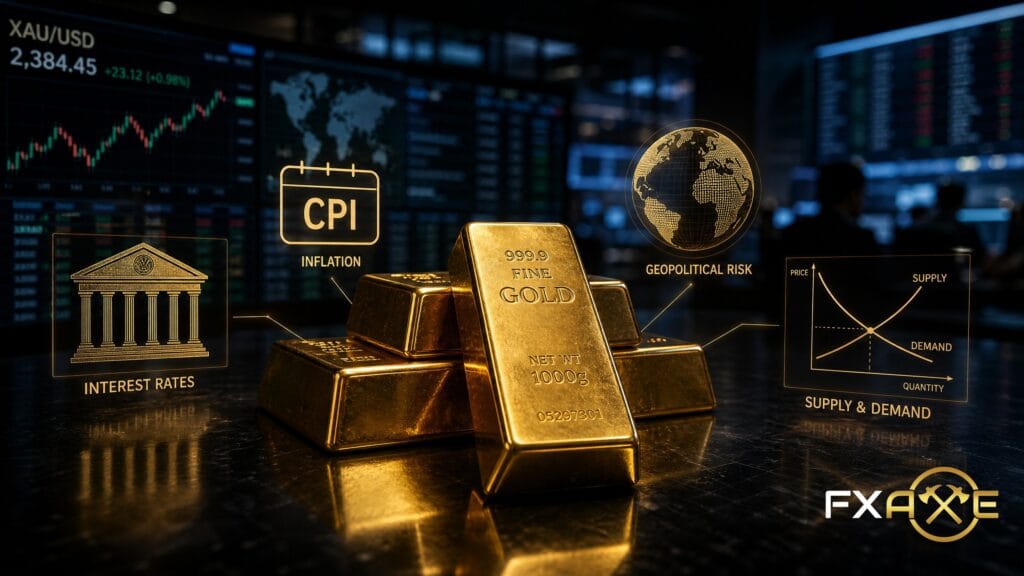
One of the main answers to what makes gold prices move is interest rate expectations, especially decisions made by the Federal Reserve.
Gold does not generate interest income, meaning it can become less attractive when interest rates rise. Higher interest rates often increase demand for assets such as bonds, which can reduce buying pressure for gold.
However, when markets expect lower interest rates, gold can become more attractive because the cost of holding the precious metal decreases.
This is why traders closely monitor Federal Reserve meetings, inflation reports, and economic data when analyzing gold.
Another important factor in what makes gold prices move is the strength of the U.S. dollar.
Gold is priced in dollars globally, meaning changes in the currency can influence demand. When the dollar strengthens, gold becomes more expensive for buyers using other currencies, which can pressure prices lower.
When the dollar weakens, gold becomes cheaper for international buyers, potentially increasing demand.
This relationship makes the U.S. Dollar Index (DXY) one of the key indicators traders watch when studying gold markets.
Inflation is another major answer to what makes gold prices move.
Many investors consider gold a store of value because it has historically helped protect wealth during periods of rising prices. When inflation increases, some investors turn toward gold as a way to preserve purchasing power.
However, inflation alone does not determine gold’s direction. Traders must also consider how central banks respond.
If higher inflation causes central banks to increase interest rates aggressively, gold may face pressure from higher yields and a stronger currency.
A major part of what makes gold prices move is investor sentiment during uncertain periods.
Gold is widely considered a safe-haven asset because investors often seek protection when markets become unstable. Events such as geopolitical conflicts, financial uncertainty, and political tensions can increase demand for gold.
During periods of fear, investors may reduce exposure to riskier assets and move funds into traditional safe-haven markets.
However, geopolitical events can have different effects depending on other market conditions, including interest rates and currency movements.
Understanding what makes gold prices move also requires looking at basic supply and demand.
Gold supply comes from mining production and recycled gold, while demand comes from investors, jewelry buyers, technology companies, and central banks.
Central bank gold purchases have become an important market factor because countries often increase gold reserves as part of their financial strategy.
When demand increases faster than supply, prices can rise. When demand weakens, gold prices may experience downward pressure.
For beginners trying to understand what makes gold prices move, the most important step is following the major market drivers.
Traders should monitor:
Gold does not move because of one single event. Instead, prices react to the combination of economic data, investor expectations, and global market conditions.
Learning what makes gold prices move gives beginner traders a stronger foundation for understanding the precious metals market.
Interest rates, the U.S. dollar, inflation, geopolitical risks, and supply and demand all influence gold prices. By understanding these drivers, traders can better explain why gold rises or falls during different market conditions.
The goal is not to predict every gold price movement but to understand the factors behind market changes. A strong understanding of these fundamentals can help beginners make better-informed trading decisions.
What makes gold prices move is ultimately about understanding the connection between economic conditions, investor behavior, and global market trends.
Follow us on FX Axe YouTube Channel to get real-time insights, broker reviews and trading education videos.
Read next:
Gold Holds Above $4050 As Fed Hike Odds And Iran Risks Fuel Safe-Haven Demand
How Interest Rates Affect The Forex Market: 7 Powerful Facts Every Beginner Should Know

