


The dollar has been dominating headlines this week, with analysts, traders, and news outlets predicting a continued surge. However, the reality in forex markets suggests that everyone is wrong about the dollar. While geopolitical risks and economic indicators appear bullish for the USD, technicals, market sentiment, and emerging patterns point to potential reversals that traders shouldn’t ignore.
Many traders focus on headlines or macroeconomic events like geopolitical ultimatums or interest rate decisions, but this can be misleading. The dollar rarely moves in a straight line, and relying on conventional wisdom can result in missed opportunities—or losses.
One key reason everyone is wrong about the dollar is the overbought technical conditions across major currency pairs. For instance, EUR/USD has approached critical support levels around 1.147–1.150. The Relative Strength Index (RSI) indicates that the pair is oversold, meaning a short-term bounce is likely. Traders who only follow news headlines may miss these nuances, leading to unexpected losses.
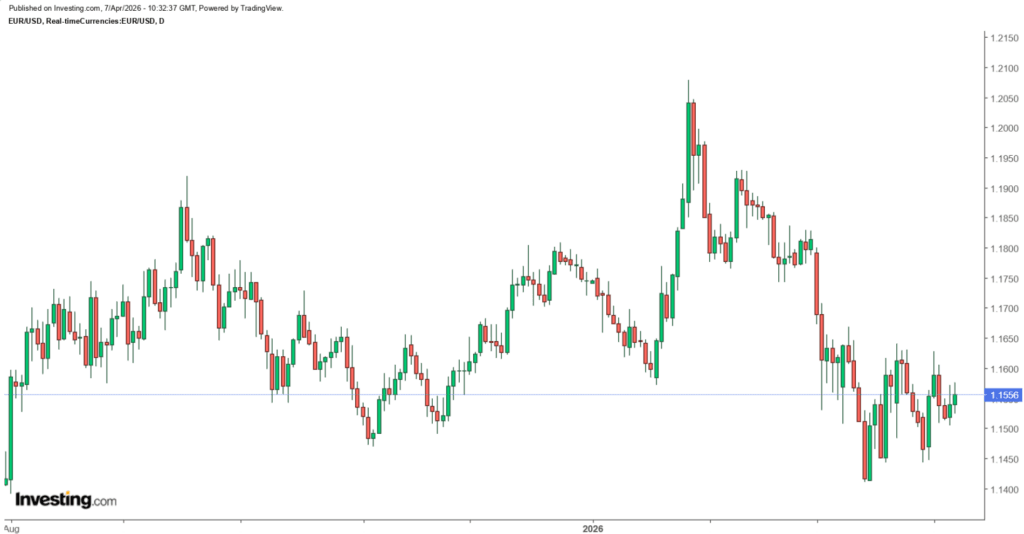
Additionally, technical patterns such as double bottoms, trendlines, and Fibonacci retracements provide signals that contradict the popular bullish narrative. Watching these levels allows traders to anticipate potential reversals rather than blindly following market sentiment.
Learn more about technical indicators on Investopedia.
Another reason everyone is wrong about the dollar is the resilience of risk assets like the S&P 500. Risk-on sentiment often leads to a weaker USD as traders rotate into equities and higher-yielding currencies. Historical patterns show that during geopolitical uncertainty, the dollar does not always sustain its gains if market confidence remains strong.
For example, a sudden rally in US equities or positive economic data can shift flows away from the dollar and back into risk-sensitive currencies such as the euro, pound, or Australian dollar. This demonstrates why relying solely on geopolitical headlines can be misleading.
Check the latest S&P 500 movement on MarketWatch.
Rising oil and commodity prices have also influenced currency behavior. USD/CAD is heavily correlated with crude oil trends, while emerging market currencies such as USD/MXN and EUR/BRL respond to commodity shifts and investor sentiment. Traders ignoring these correlations often misjudge the dollar’s strength, which reinforces why everyone is wrong about the dollar.
Moreover, gold, silver, and other commodities act as alternative safe havens in times of uncertainty, further complicating USD trends. Traders who monitor these signals can identify subtle market imbalances before headline-driven traders react.
For deeper insight, see Trading Economics on Oil & FX.
It’s easy to assume that safe-haven currencies like the dollar will always benefit from geopolitical risk. However, USD/JPY shows that the yen often moves simultaneously with risk sentiment. During certain events, both the USD and JPY can strengthen or weaken together depending on market psychology. This unpredictability explains why everyone is wrong about the dollar when judging moves solely on headlines.
Finally, emerging market currencies may outperform against the dollar unexpectedly. Pairs such as USD/MXN and USD/BRL have experienced spikes and retracements that contradict mainstream USD bullishness. Traders who diversify into these markets often capture better opportunities, demonstrating why relying only on conventional wisdom about the dollar is risky.
Learn more about EUR/USD trading strategies and USD/JPY safe-haven moves on our website.
In conclusion, everyone is wrong about the dollar because the market rarely moves in a straight line. Traders who pay attention to technicals, risk-on sentiment, commodity influences, and emerging market trends can identify opportunities that others miss.

