

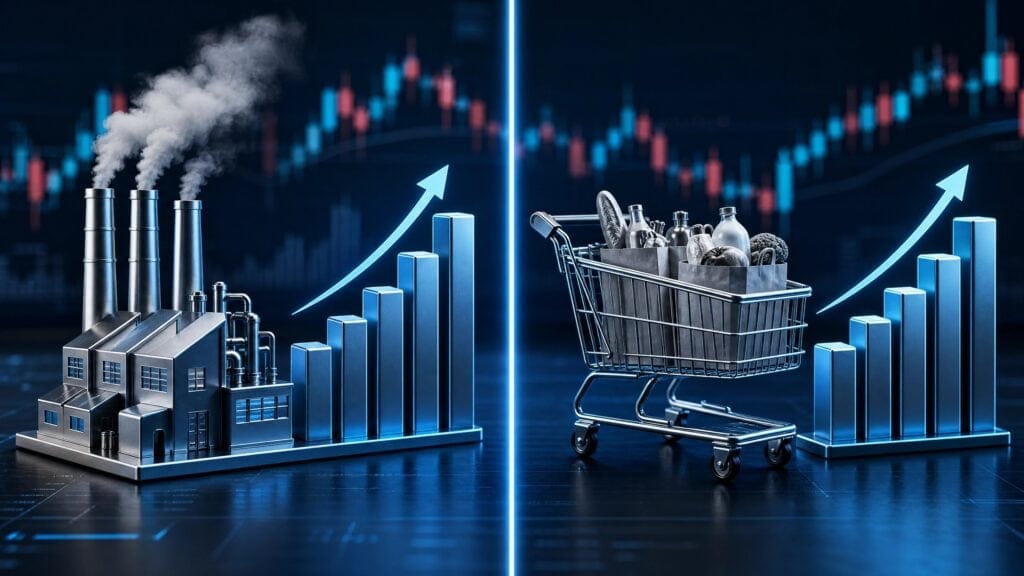
CPI vs PPI is one of the most common questions new forex traders ask when learning about inflation. Both economic reports measure changes in prices, but they track different parts of the economy and can influence the financial markets in different ways.
Understanding CPI vs PPI can help traders better interpret inflation data, anticipate central bank decisions, and prepare for increased market volatility. While many traders focus only on CPI, PPI can provide valuable clues about future inflation trends before they reach consumers.
Let's break down what each report means and why both deserve a place on every trader's economic calendar.
The Consumer Price Index (CPI) measures the average change in prices paid by consumers for everyday goods and services. It includes items such as food, housing, transportation, healthcare, and clothing.
Governments publish CPI every month to track inflation from the consumer's perspective. When prices continue rising, inflation increases. When inflation slows, CPI usually reflects that change.
In the debate of CPI vs PPI, CPI focuses on what consumers pay at the checkout. It gives central banks an important view of how rising prices affect households and overall purchasing power.
Because inflation plays a major role in interest rate decisions, CPI often creates significant volatility in the forex market.
The Producer Price Index (PPI) measures price changes that businesses receive for the goods and services they produce before those products reach consumers.
Instead of tracking retail prices, PPI looks at wholesale prices. Manufacturers, farmers, mining companies, and other producers are included in the report.
When comparing CPI vs PPI, PPI is often viewed as an early indicator of inflation because higher production costs may eventually be passed on to consumers through higher retail prices.
However, this does not always happen. Companies sometimes absorb rising costs instead of increasing prices, which is why traders monitor both reports rather than relying on only one.
Although both reports measure inflation, CPI vs PPI highlights two different stages of the economy.
CPI measures:
PPI measures:
Think of it this way.
If a bakery pays more for flour because production costs increase, that change may first appear in PPI. If the bakery later raises the price of bread, the increase could eventually appear in CPI.
This simple example helps explain why CPI vs PPI matters when analysing inflation trends.
For forex traders, CPI vs PPI can influence market expectations about future interest rates.
If CPI comes in higher than expected, investors may believe the central bank will keep interest rates higher for longer to control inflation. This often supports the country's currency.
PPI can also move markets, especially if producer prices rise much faster than economists expected. Strong PPI data may signal that consumer inflation could increase in the coming months.
During weeks when both reports are released, traders often compare CPI vs PPI to see whether inflation pressures are building or easing.
This information can influence major currency pairs such as EUR/USD, GBP/USD, USD/JPY, and USD/CAD.
Many beginners ask whether CPI or PPI is more important.
The answer depends on the market environment.
In most cases, CPI receives more attention because central banks closely monitor consumer inflation when making interest rate decisions.
However, dismissing PPI would be a mistake.
When studying CPI vs PPI, experienced traders know that PPI can sometimes provide an early warning about future inflation before it appears in consumer prices.
Watching both reports together gives a more complete picture of the economy than focusing on only one.
Understanding CPI vs PPI is about more than knowing definitions. It helps traders understand why currencies react after major inflation releases.
Rather than looking at a single headline, compare both reports with market expectations and previous readings. Markets often react more to surprises than to the numbers themselves.
Adding both CPI and PPI release dates to your economic calendar can help you prepare for periods of higher volatility and avoid being caught off guard by sudden price movements.
Learning CPI vs PPI is an important step for every forex trader. While CPI shows how inflation affects consumers, PPI reveals what businesses are experiencing behind the scenes. Together, these reports provide valuable insight into inflation trends and potential central bank decisions.
Instead of focusing on one report, use CPI vs PPI together to build a broader understanding of the economy. As your knowledge grows, you'll be better prepared to interpret economic news, understand market reactions, and make more informed trading decisions.
For more forex education, market insights, and daily trading updates, join the FX Axe Youtube Channel.
Read more:
Warsh Q&A: Inflation Is A Choice, We Will Deliver Price Stability
Top 10 CPI Volatility Strategy Tips For Gold Traders: A Complete Guide

