

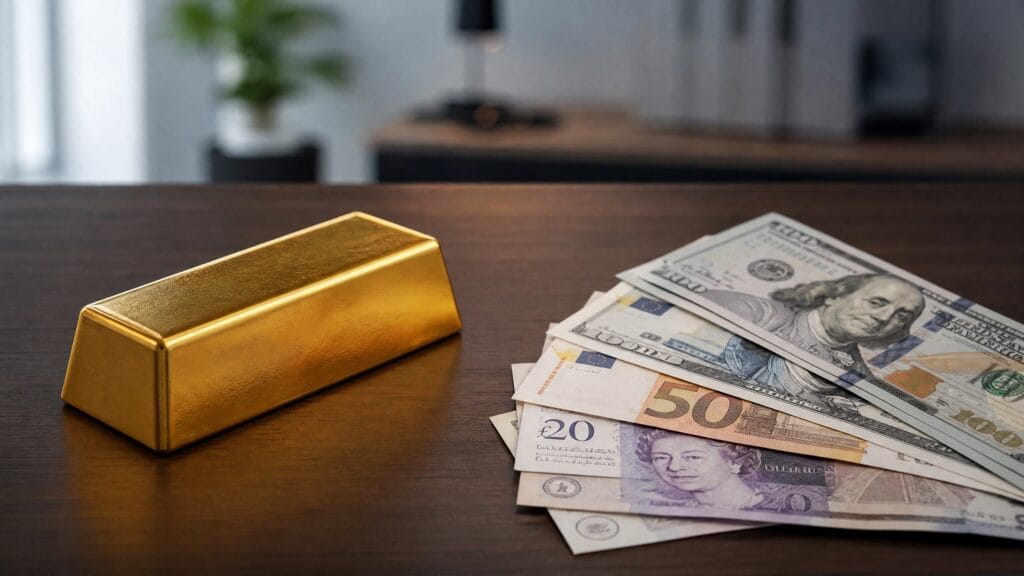
If you're new to trading, you've probably wondered about Gold vs Forex and which market is easier to start with. Both markets are among the most traded in the world, offering opportunities to profit from price movements without owning the underlying asset. However, they differ in volatility, liquidity, risk, and the skills required to trade successfully.
Understanding Gold vs Forex before opening your first trade can help you avoid common beginner mistakes. While some traders enjoy the fast-moving nature of gold, others prefer the steadier price action of major currency pairs. In this guide, we'll compare Gold vs Forex in simple terms to help you choose the market that best matches your experience and trading goals.
Gold trading involves speculating on the price of gold, most commonly through the XAU/USD trading pair. Instead of buying physical gold, traders aim to profit from price movements by buying or selling contracts.
Gold is considered a safe-haven asset, meaning investors often buy it during periods of economic uncertainty, high inflation, financial crises, or geopolitical tensions. Because of this, gold can experience significant price swings, creating both opportunities and risks for traders.
Many traders also use gold to diversify their portfolios because it often behaves differently from currencies and stocks.
Forex, short for foreign exchange, is the global market where currencies are traded. Traders speculate on whether one currency will strengthen or weaken against another.
Some of the most popular currency pairs include:
With more than $7 trillion traded every day, the forex market is the largest and most liquid financial market in the world. High liquidity usually means tighter spreads, smoother price movements, and faster trade execution.
One of the most noticeable differences in Gold vs Forex is volatility.
Gold is known for making larger price moves, especially during Federal Reserve meetings, inflation reports, geopolitical conflicts, and unexpected economic news.
Major forex pairs such as EUR/USD generally move more gradually, making them easier for beginners to follow and analyze.
Winner for beginners: Forex
Another important aspect of Gold vs Forex is understanding what influences prices.
Gold prices are mainly driven by:
Forex prices respond to:
Learning these market drivers is essential regardless of which market you choose.
Liquidity affects how quickly and efficiently trades are executed.
Forex is the most liquid market in the world, allowing traders to buy and sell currencies with minimal delays.
Gold is also highly liquid but can experience wider spreads during periods of high market volatility.
For beginners, forex often provides a smoother trading experience.
When comparing Gold vs Forex, risk management should always come first.
Gold's larger price swings can generate bigger profits, but they can also lead to larger losses if stop-loss orders are not used.
Forex typically provides more controlled price movements, giving beginners more time to react and manage trades effectively.
No matter which market you choose, never risk more than you can afford to lose.
The learning curve is another major factor in Gold vs Forex.
Forex is generally easier to understand because major currency pairs often respect technical support and resistance levels more consistently.
Gold reacts quickly to global news and investor sentiment, making it more challenging for new traders who are still learning market behavior.
Both markets offer excellent opportunities throughout the trading week.
Gold tends to become most active during the London and New York trading sessions, especially when important economic data is released.
Forex provides consistent opportunities every day, particularly in major currency pairs with high trading volume.
Neither market is better in every situation. Successful traders learn when each market offers the best opportunities.
For most beginners, Gold vs Forex is less about potential profits and more about learning the fundamentals.
Forex is often the better starting point because it offers:
Gold can be an excellent market once traders develop confidence, understand risk management, and become comfortable trading around major economic events.
Many professional traders eventually trade both markets because each offers unique advantages under different market conditions.
When evaluating Gold vs Forex, there is no one-size-fits-all answer. Your choice should depend on your trading experience, personality, and tolerance for risk.
If you're completely new to trading, forex provides a more forgiving learning environment thanks to its high liquidity and generally smoother price action. Gold, while exciting and potentially rewarding, demands greater discipline because of its higher volatility and sensitivity to global events.
The best approach is to master one market before expanding into another. Focus on building a solid trading plan, managing risk carefully, and continuously improving your skills through practice and education. Over time, you'll gain the confidence to decide whether forex, gold, or a combination of both best suits your trading style.
Want to learn more about forex, gold, market news, and trading strategies?
Join the FX Axe Youtube Channel for free daily insights, educational content, and market updates.
Read more:
Gold Price Falls 1.4% To $4,050 As Iran Tensions Revive Fed Rate Hike Fears
5 Key Differences Between Stop Loss Vs Take Profit: How To Manage Forex Risk

