EURUSD Bid: --
USDJPY Bid: --
GBPUSD Bid: --
USDCHF Bid: --
AUDUSD Bid: --
USDCAD Bid: --
NZDUSD Bid: --
EURGBP Bid: --
GBPJPY Bid: --
WTI Bid: --
BRENT Bid: --
XAUUSD Bid: --
XAGUSD Bid: --
SPX500 Bid: --
DAX40 Bid: --
US30 Bid: --
JPN225 Bid: --
NAS100 Bid: --
UK100 Bid: --
BTCUSD Bid: --
ETHUSD Bid: --
LTCUSD Bid: --
XRPUSD Bid: --
EURUSD Bid: --
USDJPY Bid: --
GBPUSD Bid: --
USDCHF Bid: --
AUDUSD Bid: --
USDCAD Bid: --
NZDUSD Bid: --
EURGBP Bid: --
GBPJPY Bid: --
WTI Bid: --
BRENT Bid: --
XAUUSD Bid: --
XAGUSD Bid: --
SPX500 Bid: --
DAX40 Bid: --
US30 Bid: --
JPN225 Bid: --
NAS100 Bid: --
UK100 Bid: --
BTCUSD Bid: --
ETHUSD Bid: --
LTCUSD Bid: --
XRPUSD Bid: --

What Are Hawkish vs Dovish Central Banks?

Posted: 31st Jul 2026

If you've ever watched the news after a central bank meeting, you've probably heard experts say the bank was "hawkish" or "dovish." These words may sound complicated, but they are actually simple once you understand them.

Learning about hawkish vs dovish central banks is important because central banks play a big role in the forex market. Their decisions and even the words they use can cause currencies like the US dollar, euro, British pound, and Japanese yen to rise or fall.

Let's break it down in the easiest way possible.
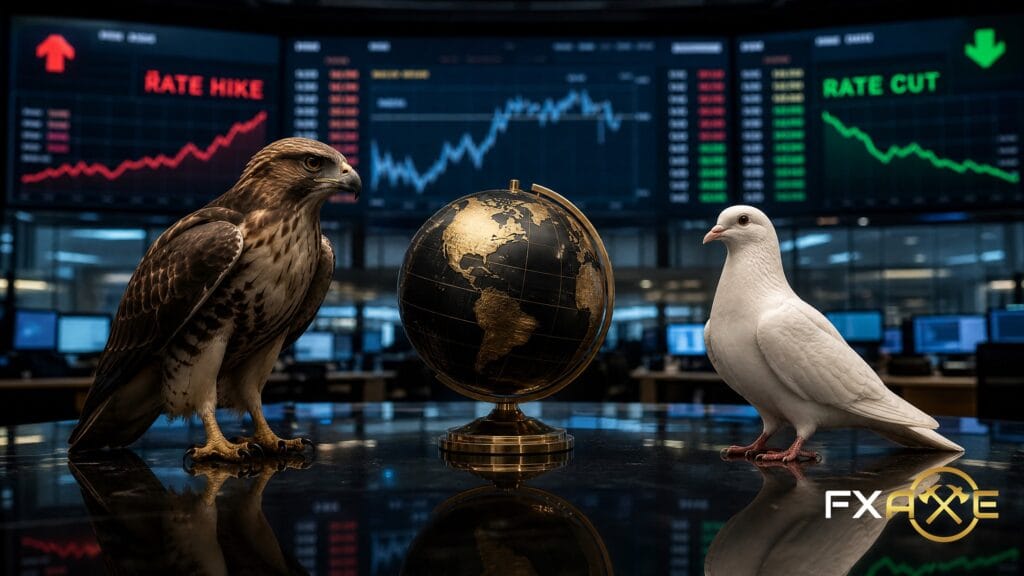
Hawkish vs Dovish Central Banks

What Are Hawkish vs Dovish Central Banks?

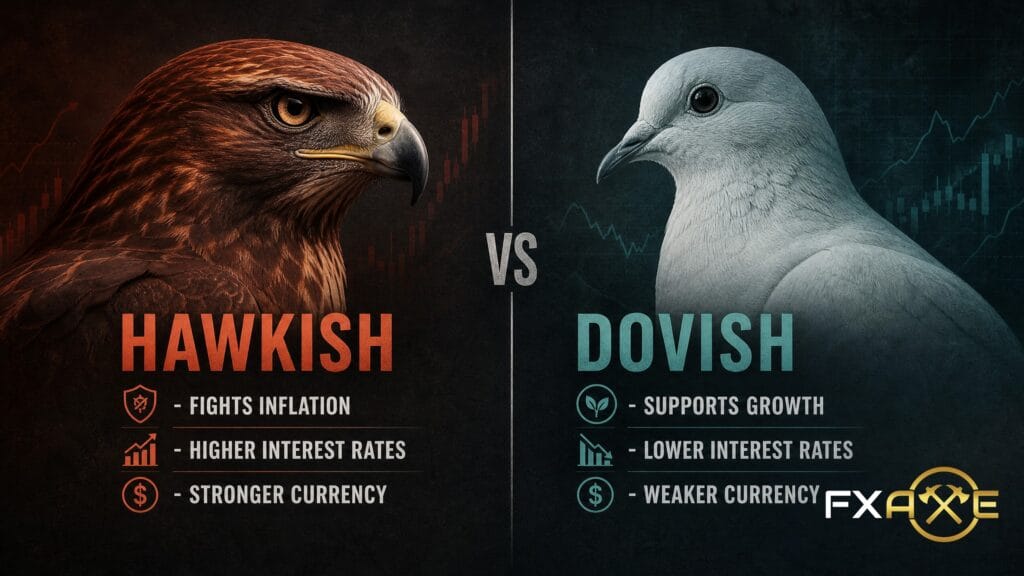
The easiest way to remember the difference between hawkish vs dovish central banks is this:

  • Hawkish = Wants to fight inflation.
  • Dovish = Wants to help the economy grow.

Think of it like two different priorities.

A hawkish central bank is worried that prices are rising too quickly. To slow inflation down, it may raise interest rates or keep them high.

A dovish central bank is more concerned about helping businesses grow, creating jobs, and encouraging people to spend money. It may keep interest rates low or lower them if the economy needs support.

Neither approach is right or wrong. Central banks simply choose the policy they believe is best for the economy at that time.


Why Do Hawkish vs Dovish Central Banks Matter?

You might be wondering why forex traders pay so much attention to hawkish vs dovish central banks.

The answer is simple.

Money usually flows where investors can earn better returns.

When a central bank becomes hawkish, investors may expect higher interest rates. Higher interest rates can make that country's currency more attractive, increasing demand for it.

When a central bank becomes dovish, investors may expect lower interest rates. That can make the currency less attractive, reducing demand.

This is one reason why currencies often move after central bank meetings.


A Simple Example

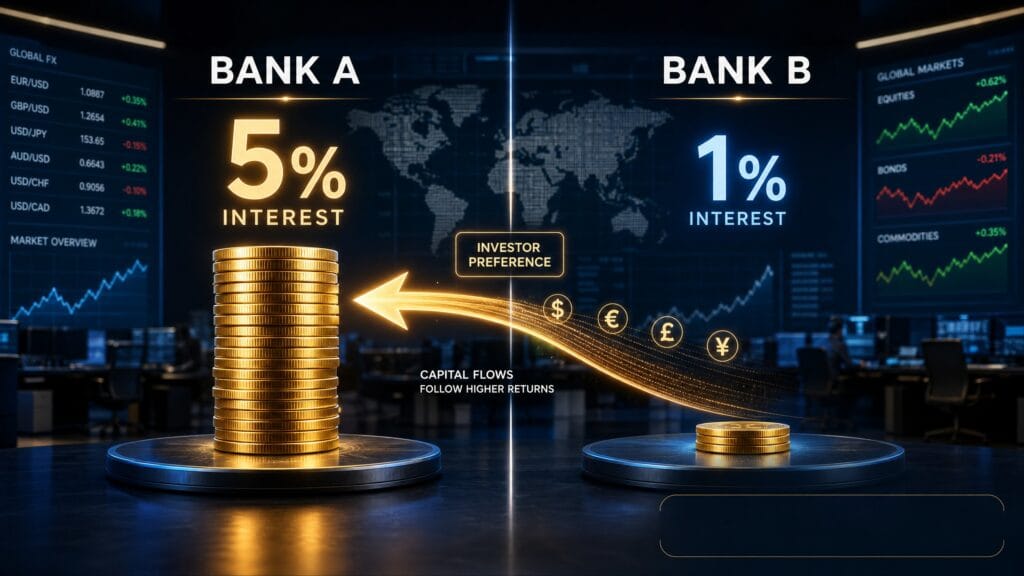
Imagine you have two savings accounts.

  • Bank A pays 5% interest.
  • Bank B pays 1% interest.

Most people would choose Bank A because it offers a better return.

Currencies work in a similar way.

If a country's central bank raises interest rates, investors from around the world may move their money there to earn higher returns. As more investors buy that country's currency, its value can increase.

This is why hawkish vs dovish central banks are closely watched by traders.

How Do Traders Know If a Central Bank Is Hawkish or Dovish?

It isn't just about whether interest rates go up or down.

Traders also listen carefully to what central bank officials say during speeches and press conferences.

A hawkish statement might include phrases like:

  • Inflation is still too high.
  • Higher interest rates may be needed.
  • We are focused on controlling prices.

A dovish statement might sound like this:

  • The economy is slowing down.
  • Inflation is improving.
  • We may support growth if needed.

Even if interest rates stay exactly the same, these comments can move the forex market because traders are always thinking about what could happen next.
Hawkish vs Dovish Central Banks

Why Doesn't the Market Always Move the Way People Expect?

This is one of the biggest lessons about hawkish vs dovish central banks.

Many beginners think:

Higher interest rates = Currency goes up.

But it doesn't always work that way.

Sometimes traders already expect a rate increase before the meeting happens. When the decision is finally announced, there are no surprises, so the market barely reacts.

Instead, traders focus on the central bank's future plans.

For example, if a central bank raises interest rates but hints that it may stop raising them soon, the currency could actually weaken.

That's why experienced traders pay attention to both the decision and the message behind it.


Real-World Examples

Many of the world's biggest central banks can be either hawkish or dovish depending on economic conditions.

For example:

  • The Federal Reserve (Fed) may become hawkish when inflation is high.
  • The European Central Bank (ECB) may change its tone depending on inflation and economic growth across Europe.
  • The Bank of Japan (BOJ) is closely watched because even small changes in its policy or guidance can affect the Japanese yen.

Their approach changes over time as the economy changes.


Key Takeaways

Understanding hawkish vs dovish central banks doesn't have to be difficult.

Here's a simple way to remember it:

  • Hawkish = Focus on fighting inflation.
  • Dovish = Focus on supporting economic growth.
  • Higher interest rates often make a currency more attractive.
  • Lower interest rates can reduce demand for a currency.
  • Traders pay attention not only to interest rate decisions but also to what central banks say about the future.

Want to learn more about forex trading and market fundamentals?

Visit the FX Axe YouTube Channel for beginner-friendly videos, broker reviews, trading education, and the latest forex market updates.

Latest news:

USD/JPY Drops Below 160.00: Powerful Yen Rally After BOJ Holds Rates At 1.0%

Why The Dollar Recovered After The Fed’s Decision: Strong Rebound As DXY Hits 100.93

Follow us on
Website Managed by BuiltByGo
Disclaimer: The information provided on FX Axe is for educational and informational purposes only and should not be construed as financial advice. Trading Foreign Exchange (FX), Contracts for Difference (CFDs), and other leveraged financial products involves a high level of risk and may not be suitable for all investors. Leverage can work both to your advantage and disadvantage, and as a result, you may lose more than your initial investment. Before deciding to trade FX, CFDs, or any other financial instrument, you should carefully consider your investment objectives, level of experience, and risk tolerance. You should not invest money that you cannot afford to lose. It is strongly advised that you seek independent financial advice if you have any doubts. FX Axe does not provide investment, tax, legal, or financial advice of any kind. We may receive compensation from brokers and partners featured on this website, but such relationships do not influence our reviews or recommendations. All reviews are based on our own opinions and research and should not be interpreted as endorsements or guarantees of any service. Past performance is not indicative of future results. The trading of FX and CFDs carries a significant risk of loss. By using this website, you acknowledge that FX Axe bears no responsibility for any losses you may incur from your trading activities or reliance on information provided here.

Affiliate Disclosure: Some of the links and references on FX Axe may relate to third-party brokers or service providers. In certain cases, we may receive compensation if you choose to engage with these providers through our website. This helps support the ongoing operation of the site and allows us to continue publishing content at no direct cost to our readers. Our content is created with the aim of being informative and useful. While commercial relationships may exist, we strive to ensure that the information presented remains objective and based on our own research and perspective.
cross